Youssef Abdelke

Artist Biography

Youssef Abdelké was born in Qamishli, north-east of Syria in 1951. At the age of 15, he moved to Damascus with his family where he studied at the Faculty of Fine Arts and graduated in 1976. Abdelké was arrested for nearly two years in 1978 because of his political activism. He then moved to France, “attracted by anything that might satisfy his burning thoughts of painting.” In Paris, he graduated from the École Nationale Supérieure des Beaux- Arts in 1986 and later from Paris XIII with a PhD in Fine Arts in 1989. He lived in exile in Paris for nearly 25 years.

In 2005, Abdelké managed to return safely to Damascus and organize a large exhibition there. In 2010, his Syrian passport was confiscated and he was arrested again for five weeks in 2013.

The works of Youssef Abdelké are in a large number of museums and institutions, including The British Museum in London, UK, the Institut du Monde Arabe in Paris, France, The National Museum of Kuwait and the Amman Museum of Modern Art in Jordan.

The artist currently lives and works in Damascus.

Youssef Abdelke is represented by Galerie Tanit Beirut/Munich.

Exhibitions
Featured
Abu Dhabi Art 2025

From November 19, 2025 to November 23, 2025

Featured
Bittersweet Symphony
Collective Exhibition

From January 15, 2025 to February 20, 2025

Featured
ART DUBAI 2024

From Februrary 28, 2024 to March 3, 2024

Featured
Youssef Abdelké
Solo Exhibition

From October 18, 2023 to November 23, 2023

Featured
Beirut Art Fair 2016

From September 15, 2016 to September 18, 2016

Featured
Abu Dhabi Art 2014

From November 5, 2014 to November 8, 2014

Featured
Paper Trail
50 years
Collective Exhibition

From November 23, 2022 to December 23, 2022

Featured
ART DUBAI 2018

From March 21, 2018 to March 24, 2018

Featured
Un Bestiaire
Collective Exhibition

From September 9, 2021 to October 1, 2021

Featured
Bleak and Black
Youssef Abdelké

From November 10, 2016 to January 14, 2017

Featured
Beirut Art Fair 2017

From September 21, 2017 to September 24, 2017

Featured
Artists from Syria Today
Collective Exhibition

From March 15, 2012 to April 5, 2012

Featured
Towards the Sublime
Collective Exhibition

From June 25, 2019 to August 9, 2019

Featured
… كان يا مكان
Collective Exhibition

From February 16, 2022 to April 16, 2022

Selected Works

A keen observer of the living phenomenon, a precise, rigorous, and methodical engraver, but also a poet in images, Abdelké first represented human groups with masked heads, actors in search of an author, like the characters of Pirandello. He placed them in the night, a terribly dark night, where death and monsters were ever-present. This was his “human comedy,” a tragic comedy in which the grotesque was never excluded. Gradually, men disappeared, and animals and plants emerged from the same night. Their presence is so palpable that you feel like you can touch them, caress them with your eyes. There is no hyperrealism here, nor even “realism” in the traditional sense of the word: everything happens as if he reinvented, with each stroke, nature, a kind of encyclopedia meticulously crafted in slow motion, of natural phenomena.


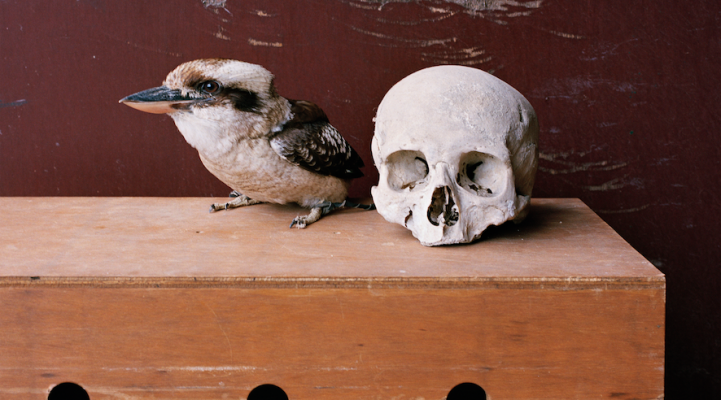
The acuity of his vision is such that you wake up as if from a dream when you look at them. It’s as if you had never truly seen, seen in depth and in three dimensions, what a simple fish is. Abdelké enters into the skull, or into the fish, or into a woman’s shoe, like Michaux “entered” an apple. He may have dissected the fish before reassembling it. He never “represents” the fish, the woman’s shoe, or the cow’s skull: he resurrects them. That is his power of fascination: everything is destined to die and disappear, but everything can be saved, as if from a flood. Every living phenomenon is a material miracle, a treasure, and a mystery. Oh, the surprise it brings when you rediscover it! I don’t know how he manages to achieve it. Observation, the utmost attention, is not enough. It’s as if he wants to reinvent the world and preserve it forever from offense, indifference, and oblivion. As if, standing in front of the cow’s skull himself, he wants all living phenomena to replace him, the Syrian engraver. No, it’s not “Abdelké” that interests him, it’s everything that is not Abdelké, everything that will outlive Abdelké, everything that far surpasses Abdelké.


I am certain that Baudelaire would have been amazed by his engravings, would have dedicated poems and fervent, enthusiastic texts to them. There will always be day and night, always light, at least for a few billion years, and always darkness. And it is in this light, in this eternal darkness that Abdelké works, as if by the glow of a candle, a simple little candle, flickering in its holder.


When he achieves this result, which I call resurrection, he smiles, he is content, he stops, and puts down his chisel: there’s no need to add anything. It lives, or it doesn’t. It emerges, it resurfaces, or it doesn’t. The entire question of art is there. In fact, the word “art” is inadequate. It’s not about art, but the transformation of death into living existence. Abdelké’s fish is not just a fish: it’s an arrow, a radiance, a breath, a whispered call to life. But it’s also a fish, I don’t know, maybe: a salmon, a sardine, a pike. But it flies like a bird in the night where we find ourselves plunged once again. In a large charcoal drawing on canvas, he has drawn a fish head in a box, and this enormous head looks at us as if the image of death is even more alive, for Abdelké, than that of life.


Alain Jouffroy

Youssef Abdelke
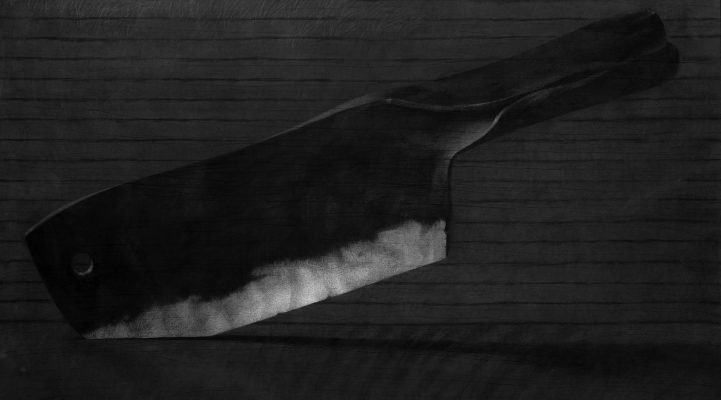
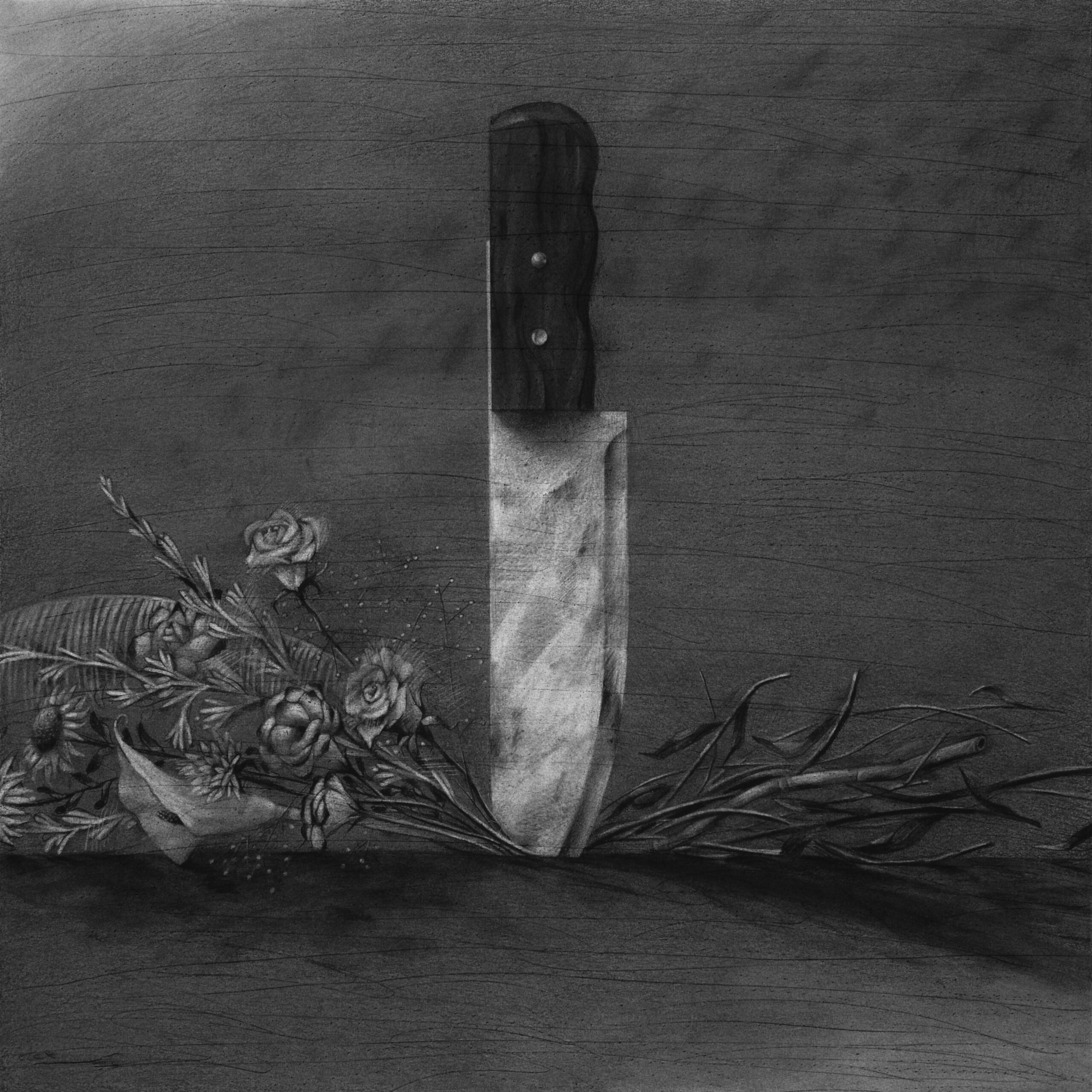
Knife and Flowers
Charcoal on Paper
2023
103 cm x 103 cm

Youssef Abdelke
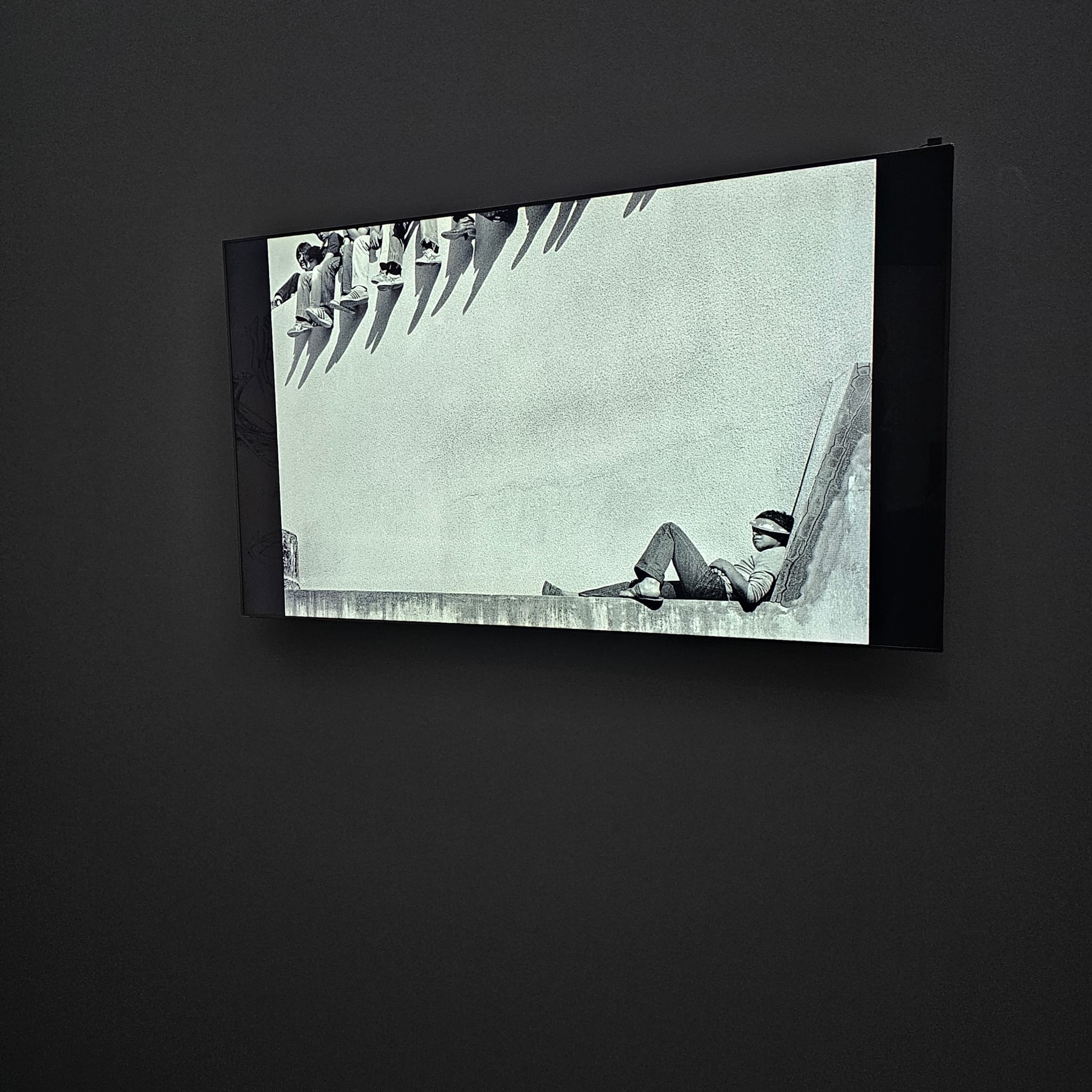
Refugee Camp Children
Charcoal on Paper
2020
104.5 cm x 104 cm

Youssef Abdelke
Fish 2
Charcoal on Paper
2010
98 cm x 97 cm

A keen observer of the living phenomenon, a precise, rigorous, and methodical engraver, but also a poet in images, Abdelké first represented human groups with masked heads, actors in search of an author, like the characters of Pirandello. He placed them in the night, a terribly dark night, where death and monsters were ever-present. This was his “human comedy,” a tragic comedy in which the grotesque was never excluded. Gradually, men disappeared, and animals and plants emerged from the same night. Their presence is so palpable that you feel like you can touch them, caress them with your eyes. There is no hyperrealism here, nor even “realism” in the traditional sense of the word: everything happens as if he reinvented, with each stroke, nature, a kind of encyclopedia meticulously crafted in slow motion, of natural phenomena.


The acuity of his vision is such that you wake up as if from a dream when you look at them. It’s as if you had never truly seen, seen in depth and in three dimensions, what a simple fish is. Abdelké enters into the skull, or into the fish, or into a woman’s shoe, like Michaux “entered” an apple. He may have dissected the fish before reassembling it. He never “represents” the fish, the woman’s shoe, or the cow’s skull: he resurrects them. That is his power of fascination: everything is destined to die and disappear, but everything can be saved, as if from a flood. Every living phenomenon is a material miracle, a treasure, and a mystery. Oh, the surprise it brings when you rediscover it! I don’t know how he manages to achieve it. Observation, the utmost attention, is not enough. It’s as if he wants to reinvent the world and preserve it forever from offense, indifference, and oblivion. As if, standing in front of the cow’s skull himself, he wants all living phenomena to replace him, the Syrian engraver. No, it’s not “Abdelké” that interests him, it’s everything that is not Abdelké, everything that will outlive Abdelké, everything that far surpasses Abdelké.


I am certain that Baudelaire would have been amazed by his engravings, would have dedicated poems and fervent, enthusiastic texts to them. There will always be day and night, always light, at least for a few billion years, and always darkness. And it is in this light, in this eternal darkness that Abdelké works, as if by the glow of a candle, a simple little candle, flickering in its holder.


When he achieves this result, which I call resurrection, he smiles, he is content, he stops, and puts down his chisel: there’s no need to add anything. It lives, or it doesn’t. It emerges, it resurfaces, or it doesn’t. The entire question of art is there. In fact, the word “art” is inadequate. It’s not about art, but the transformation of death into living existence. Abdelké’s fish is not just a fish: it’s an arrow, a radiance, a breath, a whispered call to life. But it’s also a fish, I don’t know, maybe: a salmon, a sardine, a pike. But it flies like a bird in the night where we find ourselves plunged once again. In a large charcoal drawing on canvas, he has drawn a fish head in a box, and this enormous head looks at us as if the image of death is even more alive, for Abdelké, than that of life.


Alain Jouffroy

Youssef Abdelke News
""
على حواف الظل والنور: حوار مع يوسف عبدلكي عن سوريا والفن والحرية
Read Article
Featured
Youssef Abdelké at Folk Art Space
Read Article
"Folk Art Space in Manama, Bahrain presents a solo exhibition by Youssef Abdelké.   The exhibition opens on May 21, 2024 and runs until July 2, 2024."
"Youssef Abdelké and Fouad Elkoury will be exhibiting at the Musée d’Art Moderne de Paris as part of a collective exhibition titled Présances Arabes,curated by Odile Burluraux, Madeleine de Colnet and Morad Montazami.  The exhibition will be on show from April 5, 2024 to August 25, 2024."
Youssef Abdelké and Fouad Elkoury at the Musée d’Art Moderne de Paris
Read Article
Featured
يوسف عبدلكي الفنان الشاهد على زمن الرعب ​الذي لا يُنسى
Read Article
""
""
معرضان فنيان للثنائي أنطونيلو غيزي وعبدلكي
Read Article